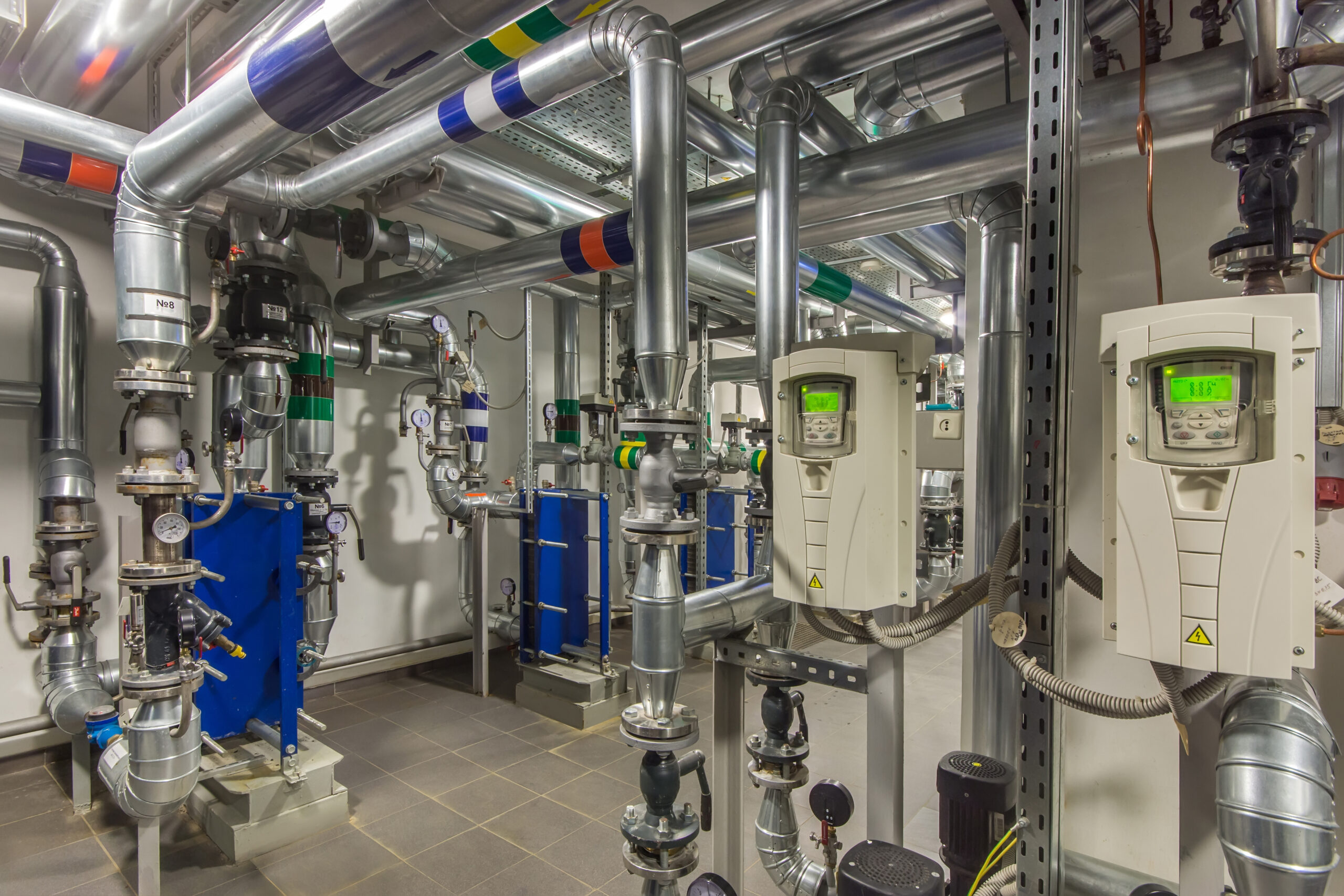
The UK Net Zero Carbon Buildings Standard changes how sustainability is evidenced in existing buildings. Verification depends on measured performance in use.
Published 22 May 2026
The UK Net Zero Carbon Buildings Standard (UKNZCBS) changes how sustainability is evidenced in existing buildings. Its significance does not sit in the headline ambition of net zero carbon. It sits in how that ambition is tested when applied to assets with established systems, existing occupiers and limited capacity for change.
The change is straightforward. A credible net zero claim depends on measured performance in use rather than design stage intent. Sustainability moves into the same space as programme, cost, commissioning and operation, where outcomes are shaped by constraint as much as design.
In existing buildings, this brings into focus a set of conditions that have always existed, however were often treated as secondary to the design narrative.
The Standard separates prediction from proof. Modelling remains useful, however it does not stand as evidence on its own. Verification depends on twelve months of metered data after occupation, with the building operating under normal conditions.
That introduces a different sequence of certainty.
In existing buildings, practical completion does not provide confirmation that the outcome has been achieved. It indicates that systems have been installed and configured as intended. Performance is only established after a period of operation, when occupier behaviour, controls and maintenance begin to influence how the building actually performs.
The period between those points carries risk. Not theoretical risk. Operational.
Strategies for existing buildings are commonly built on a set of assumptions that hold at feasibility stage. Systems are expected to operate as designed. Commissioning is expected to address residual issues. Occupancy is assumed to sit within defined parameters.
These assumptions are reasonable. The difficulty is that they are often applied without full visibility of the asset.
Surveys frequently reveal a different condition. Electrical infrastructure operates close to capacity, leaving limited headroom for electrification. Metering is incomplete or inconsistent. Building management systems have been modified over time, often without a clear record of changes.
The consequence is gradual adjustment rather than immediate failure. Design intent is modified to accommodate constraints as they become visible. Some changes are minor. Others alter how systems are structured and controlled.
The building that enters operation is not identical to the one originally defined.
Once performance is tied to measured outcomes, metering moves forward in the project sequence.
In existing buildings, this exposes a common issue. Landlord and tenant loads are not always clearly separated. Major plant may only be partially metered. Access to data can sit with managing agents, facilities management providers or tenants.
Installing meters addresses only part of the requirement. Data must be accessible, consistent and retained over time.
It is possible for a building to operate efficiently and still be unable to demonstrate that performance. The issue sits in evidence rather than operation.
The introduction of landlord only and tenant only routes reflects how existing buildings are actually occupied. Whole building control is not always available, particularly in multi-let environments.
Defining a boundary in this context extends beyond system diagrams. It requires alignment across design, metering, lease structures and operational responsibilities. Each element has to support the same definition in use.
Where this alignment is incomplete, the issue tends to surface at handover. Responsibilities are unclear. Data does not align with defined areas. Access to information is fragmented.
At that point, the boundary becomes difficult to apply in practice within the constraints of the occupied building.
The choice between a single stage intervention and a phased approach reflects the constraints of the existing asset rather than a preference in design.
A one go approach depends on access, decant and capital availability. A phased approach aligns more readily with occupied buildings, however it requires continuity of data, consistent governance and coordination across multiple stages of work.
The technical outcome may converge over time. The route taken affects how risk is managed.
Electrical capacity often sits behind these decisions. In existing buildings, where electrification is proposed, available supply and the need for reinforcement influence both programme and cost. The constraint tends to become visible once demand is tested against what the asset can support.
In existing buildings, once the asset is handed back into use, attention shifts to how systems are run in practice.
Changes are incremental. Setpoints are adjusted. Operating hours extend. Faults persist. Each adjustment is small, however the cumulative effect alters system behaviour.
Without structured oversight, these changes move performance away from the original intent.
The Standard places emphasis on this period. Seasonal commissioning, review of trend data and defined responsibility for fault resolution become part of demonstrating performance, rather than post handover refinement.
Where that structure is in place, systems tend to settle into stable operation. Where it is absent, performance drifts without a clear point of correction.
Embodied carbon assessment in existing buildings is influenced by procurement and construction as much as design.
Material substitutions, gaps in product data and incomplete as built records introduce uncertainty. These conditions are common in refurbishment, where existing structures and interfaces require adjustment as works progress.
Design stage calculations provide a position based on expected inputs. Maintaining that accuracy through delivery relies on consistent data capture and control of change.
Where information is incomplete, rebuilding the dataset after completion is possible. It is rarely precise.
The Standard changes when certain issues need to be addressed in existing buildings.
Metering strategies require definition alongside primary systems.
Verification boundaries need to align with how the building will be occupied and managed.
Responsibility for operational performance needs to be set before handover.
These are not additional tasks. They are conditions that underpin whether a strategy can be demonstrated once the building is in use.
UKNZCBS Version 1 provides a consistent basis for assessing net zero carbon outcomes.
In existing buildings, the pattern is consistent. Strategies develop around a defined intent, while the asset introduces constraints that reshape how that intent is delivered.
Where those constraints are understood and incorporated early, the path through delivery becomes more stable. Not simpler, and not without risk, however better aligned with how buildings are actually delivered and operated.
That alignment determines whether performance can be demonstrated as well as designed.
Download our UKNZCBS guides
Primary source
Official standard · External link
UK Net Zero Carbon Buildings Standard
nzcbuildings.co.uk
Frequently Asked Questions
Does the UK Net Zero Carbon Buildings Standard apply to existing buildings?
Yes. The Standard applies to both new and existing buildings. In practice, application in existing assets is more complex due to constraints around metering, system capacity, operational control and data access, which need to be resolved early in the project.
Can a building be verified at practical completion?
No. Verification depends on measured performance in use. A building can demonstrate that it is on track at completion, however a verified position requires twelve months of metered operational data after occupation.
What prevents existing buildings from reaching verification?
The most common issues are incomplete metering, lack of access to energy data, unclear landlord and tenant boundaries and limited ownership of year one performance. These are delivery and operational issues rather than design failures.
How important is metering in refurbishment projects?
It is fundamental. Without reliable metering and access to data, performance cannot be demonstrated regardless of how the building operates. In existing buildings, establishing this infrastructure is often one of the most critical early tasks.
Is a phased retrofit approach compatible with UKNZCBS?
Yes. A step by step approach can align with the Standard, however it introduces dependency on consistent data, governance and long term coordination. Verification relies on continuity, not just individual interventions.
To discuss UKNZCBS alignment for an existing building or refurbishment project, contact your nearest office or get in touch via our contact page.